
1. The Problem: Why Camera Audio Disappoints
Viewers forgive a lot of visual imperfection, but they rarely forgive poor sound.
The cause is simple.
The result is video audio that sounds like it was recorded from across the room, even when the camera was only an arm's length away.
2. How a Shotgun Microphone Hears the World
A shotgun microphone is built around a long, narrow body, often with a slotted tube at the front.
Audio professionals describe this behavior as a directional pickup pattern.
- Supercardioid: a fairly tight focus on the front, with a small area of sensitivity directly behind the microphone.
- Hypercardioid: an even narrower front pickup, with slightly more rear sensitivity.
- Lobar or interference-tube designs: the longer "shotgun" style, which reduces off-axis sound through the slots in the barrel.
You do not need to memorize the terminology.
This directional focus is also why shotgun microphones suit video so well. A camera naturally points at the subject, and a microphone mounted on the camera points in the same direction. Picture and sound are aimed at the same target. If you want to see the range of options built for this purpose, the shotgun microphones for cameras and video setups collection is a good place to start.
3. Interviews: Keeping the Guest Front and Center
Interviews are where directional audio proves its worth.
With a camera microphone, the guest's voice competes with every other sound at roughly equal weight.
A few habits improve interview results further:
- Get close. Even a directional microphone sounds better when it is nearer the speaker. Halving the distance has a larger effect than most people expect.
- Aim at the mouth, not the camera lens. Point the microphone toward the speaker's chin or mouth area and keep it steady.
- Choose the room carefully. Soft furnishings, curtains and carpets absorb reflections. Hard, bare rooms add echo that no microphone can fully remove.
- Record a few seconds of room tone. This helps later if you need to smooth edits.
For two-person interviews, a single shotgun microphone can work when both people sit close and the microphone is placed between them at a sensible angle.
4. Vlogging: Handling Wind, Traffic and Movement
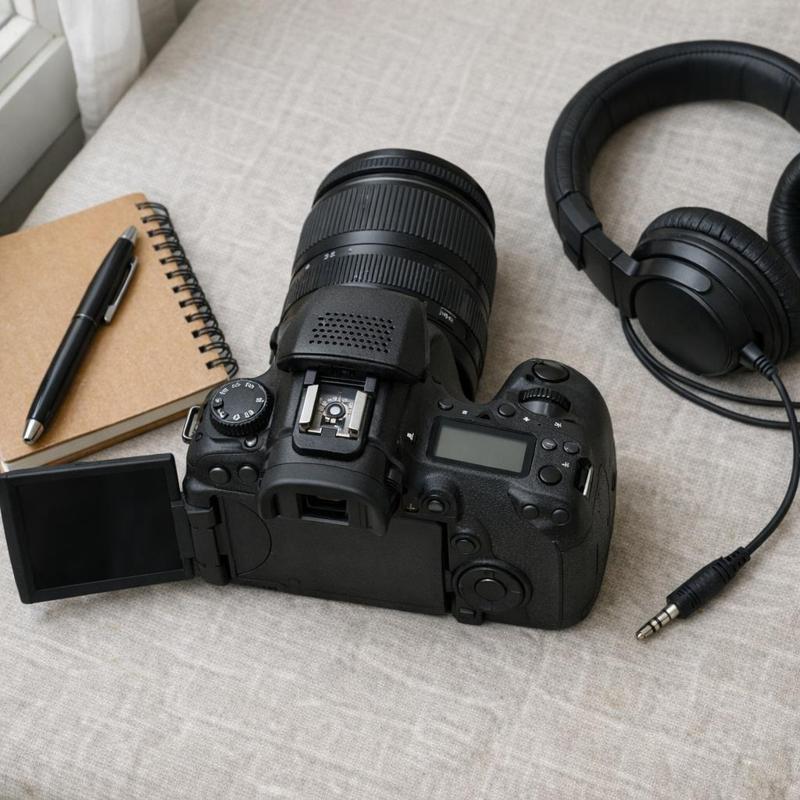
Vlogging is unpredictable. You walk, talk, turn around and change locations within minutes.
Outdoors, however, directional microphones face a new enemy: wind. Even a light breeze creates low rumbling noise when it hits the microphone capsule directly. This is why a foam cover or a furry windshield is considered essential equipment, not an optional extra. The microphone accessories category includes protective items like these, along with other practical add-ons for everyday recording.
Practical vlogging tips:
- Fit a windscreen every time you shoot outdoors, even on calm days.
- Keep the microphone about arm's length from your mouth when filming yourself.
- Turn your body away from loud traffic when you can, so the microphone's rear and sides face the noise.
- Do a quick test recording and listen with headphones before you start a long take.
Handling noise is another common vlogging issue.
5. Filmmaking: Matching Sound to the Frame
In filmmaking, a shotgun microphone is often held on a boom pole just outside the frame, positioned above or in front of the actors.
Sound that matches the shot has a natural sense of space.
Filmmakers also value shotgun microphones for:
- Clean dialogue: an isolated voice is easier to edit and mix.
- Ambient control: background sound can be added back in post-production at a level you choose, rather than being baked into the recording.
- Flexibility: the same microphone can serve interviews, B-roll sound and scripted scenes.
Not every project has a dedicated sound person, of course.
6. Mounting, Distance and Aim: Practical Setup
Owning the right microphone is only half the job.
Choose a stable mounting point
Most camera-mounted shotgun microphones attach through a cold shoe or hot shoe. If your camera or rig has limited space, hot shoe accessories can add extra mounting points for lights, monitors and microphones without cluttering the setup.
Isolate the microphone from vibration
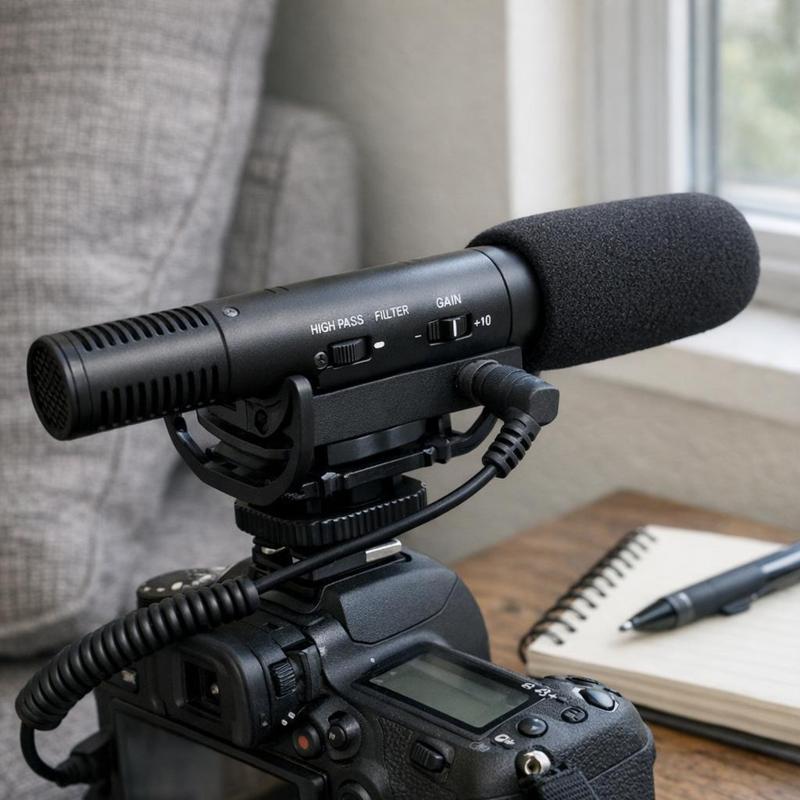
A rubber suspension mount reduces the thumps and bumps that travel through the camera body. If you are building a handheld or desk-based arrangement, microphone mounts and holders help keep the microphone positioned accurately and securely.
Mind the distance
A good rule of thumb is to keep the microphone as close to the subject as the frame allows.
Check your levels
Set recording levels so that speech peaks comfortably below distortion.
Test in the real location
Rooms behave differently from one another.
7. Pairing Shotgun Mics with Other Audio Tools
A shotgun microphone is a strong all-rounder, but it is not the answer to every situation.
When the speaker is far from the camera, moves a lot, or stands in a very noisy environment, a lavalier microphone clipped near the chest keeps the pickup distance constant. Creators who work cable-free often prefer wireless lavalier microphones, while those who prefer a simple, dependable connection can look at wired lavalier microphones. If you are weighing the two styles against each other, our comparison of lavalier and shotgun microphones covers that decision in more detail.
Many working creators carry both: the shotgun microphone for general use, planned interviews and ambient capture, and a lavalier for moving subjects or difficult acoustics.
8. Summary: A Simple Plan for Cleaner Video Audio
Clear audio is rarely about expensive gear.
- Built-in camera microphones capture everything, so voices sound distant and mixed with noise.
- Shotgun microphones use a narrow pickup pattern, favoring sound from the front and reducing side and rear noise.
- For interviews, aim the microphone at the speaker and keep it close.
- For vlogs, use a windscreen and a suspension mount to manage wind and handling noise.
- For filmmaking, use the microphone's focus to capture clean dialogue and add ambience later.
- Test and monitor your audio before every important recording.
Good sound makes your visuals feel more professional and keeps viewers watching to the end. If you are ready to build a more reliable audio setup, you can browse directional microphones and supporting gear at FrameLab and choose equipment that fits the way you shoot.